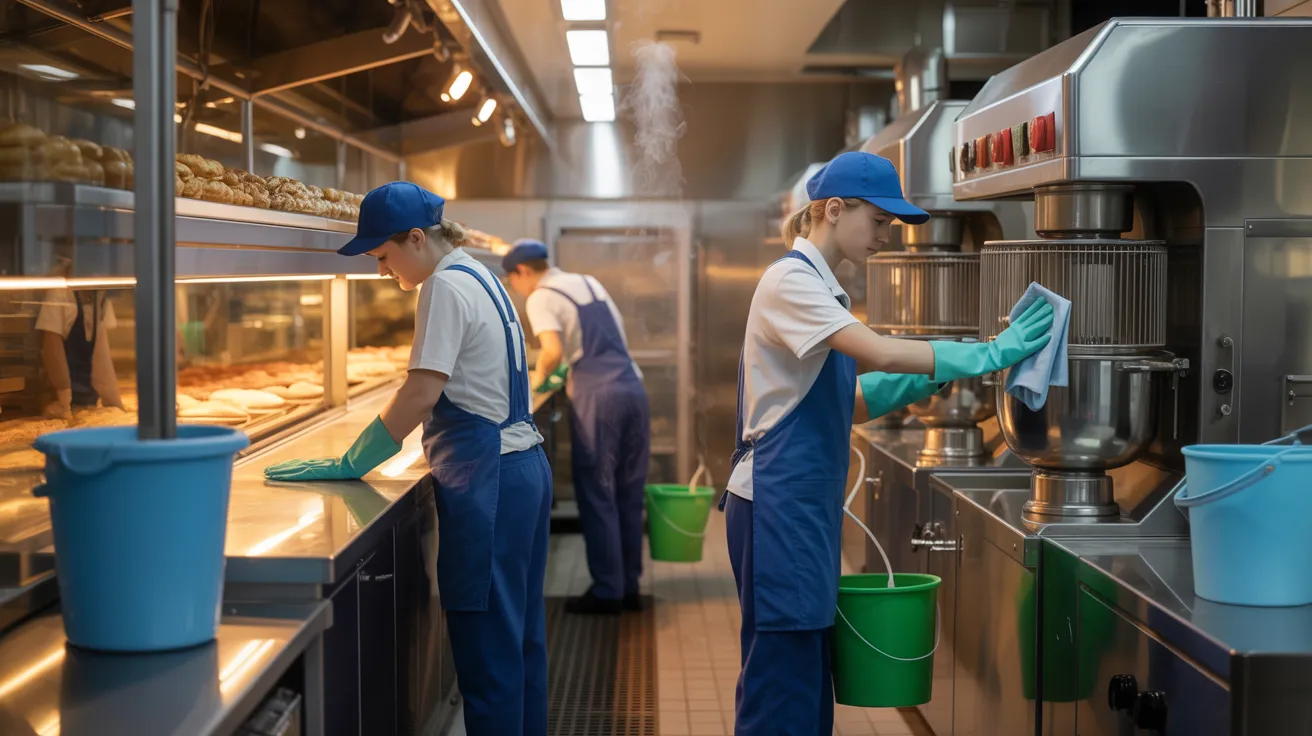
Professional food safety experts located in Brampton help maintain restaurants, food distribution facilities, baking enterprises, warehouses, and mobile food units to sanitation standards. They treat high-touch surfaces, food prep surfaces, equipment, floors, drains, restrooms, and food handling areas with certified chemicals, in correct dilution, and using documented contact periods.
Main Points
- Sanitation technicians from Brampton work with restaurants, grocery departments, commissaries, warehouses, bakeries, schools, mobile vendors, and allergen-sensitive operations.
- Cross-contamination elimination is maintained by treating high-touch surfaces, food-contact equipment, kitchens, floors, drains, restrooms, and storage areas with sectional methods.
- Approved sanitizer dilution, alignment, and contact time are validated by trained vendors, with completion filed via checks, inspections, and remedial documentation.
- Routine, recurring, and seasonal tasks distributed by area form hygiene plans founded on threat, production rate, switches, releases, and standards.
- Select providers with HACCP, sanitation, expertise, safety training, training, coverage, credentials, color-categorized equipment, and compliance-ready maintenance files.
Food Safety Cleaning Requirements for Brampton Facilities
You must follow food safety cleaning if your business is covered by public health inspection, food premises regulations, or internal HACCP-based controls. This covers food venues, break rooms, food centers, supermarket areas, butcheries, seafood displays, shops, and commercial food prep.
You also need proper hygiene cleaning in distribution centers, food processing plants, freezer facilities, commercial bakeries, educational nutrition programs, event spaces, and catering hubs. Portable and seasonal businesses count too, including food trucks, event vendors, and temporary booths. If your staff prepare raw materials, portion finished foods, warm up meals, or maintain allergen storage, your facility needs recorded sanitation procedures. In Brampton, hygiene isn't discretionary; it's part of lawful, functional, and customer safety adherence.
What Services Do Brampton Cleaning Experts Provide?
You need professional cleaners who disinfect frequently contacted areas, kitchens, floor surfaces, and restrooms to meet food safety and public health standards. They target these areas because they present the highest risk for cross-contamination, slipping risks, and hygiene violations.
Knowing their service areas enables you to validate your facility's cleaning meets required standards and regulations.
Important High-Touch Surface Sanitizing
create a sterilization schedule
sample collection to check sterilization efficacy
Food Prep Areas, Flooring, and Sanitary Facilities
Professional cleaners in Brampton prioritize kitchens, floors, and restrooms given that each location involves distinct contamination control, slip-and-fall, and public health requirements. In industrial kitchens, you need degreasing on cook lines, equipment exteriors, drains, prep surfaces, and splash zones to reduce bacterial growth and pest activity.
Professional floor care with documentation is also included. is also provided as part of the service.
Restroom sanitation requires decontaminating touch areas, bathroom equipment, stall barriers, supply stations, and bins, replacing items and managing smells. They also service restaurant moprooms, where chemical storage, sink hygiene, and drainage conditions can affect sanitation compliance and staff safety daily.
The Importance of Food Safety Cleaning in Brampton
To comply with regulatory mandates and succeed in audits, Brampton facilities must follow appropriate cleaning protocols. You also minimize cross-contamination by cleaning and sanitizing food-contact surfaces, equipment, and high-touch areas correctly. Most importantly, you safeguard community wellness by reducing the chance of food poisoning in your establishment.
Health Code Compliance
Food businesses in Brampton face strict public health standards, making food safety cleaning critical to fulfilling health code requirements, defending patrons, and preventing enforcement action. You must maintain sanitized food contact points, verifiable cleaning logs, proper chemical use, and auditable operational standards that meet municipal and provincial inspection expectations.
Quality sanitation practices assists in preventing allergen issues by minimizing particles buildup on common tools and commonly contacted zones.
Cross-Contamination Prevention
Adhering to regulatory guidelines requires your expertise in stopping cross-contamination throughout routine preparation and sanitation work. You need to separate raw ingredients from ready-to-eat foods, sanitize work stations after each task, and store cleaning supplies separately from food. Structured procedures reduce transfer risks and ensure consistent compliance during inspections.
Implementing allergen separation helps keep priority allergens from contacting shared surfaces, containers, or equipment. Deploy dedicated cutting boards, color-coded tools, and strict utensil labeling so staff don't mix items during preparation or service. Require handwashing after handling raw meat, seafood, eggs, or allergen-containing products. Refresh cleaning cloths often, and verify sanitizer strength with test strips. When you train staff to follow these controls every shift, you create a cleaner, safer operation that satisfies Brampton's food safety needs regularly.
Community Health Protection
If proper sanitation deteriorates, you don't merely risk a failed inspection—you boost the probability of pathogenic contamination affecting customers, staff, and the broader Brampton area. You also undermine your responsibility in safeguarding community wellness, especially in high-traffic food premises where contamination can spread quickly through surfaces, equipment, and touchpoints.
You need sanitation procedures that eliminate contaminants, disinfect properly, and verify results. That requires adhering to contact times, using approved disinfectants, documenting schedules, and training staff to meet health-unit expectations. These controls support disease prevention by lowering microbial loads before they contaminate surfaces or food. In Brampton, rigorous cleaning protects vulnerable populations, limits outbreak potential, and helps you demonstrate due diligence. When you maintain proper standards, you don't just meet regulations—you substantially decrease danger and support safer food service citywide.
In What Ways Does Cleaning Help Achieve Food Safety Compliance?
Implementing rigorous cleaning routines enhances food safety compliance by reducing contamination risks, managing pathogen expansion, and keeping your facility aligned with sanitation requirements under HACCP-based programs and public health regulations. You confirm that food-contact surfaces appear visibly clean and microbiologically controlled, facilitating documented preventive controls and inspection readiness.
Comprehensive cleaning additionally strengthens allergen management by eliminating residues that can trigger undeclared allergen exposure. When you match validated sanitation procedures with compliance training, your staff can follow established protocols, employ approved chemicals appropriately, fill out documentation properly, and address irregularities in advance of problems worsen. Ongoing cleaning promotes audit trails, confirms remediation efforts, and exhibits accountability when audited. It also helps you maintain quality assurance, copyright operational compliance, and reduce the likelihood of enforcement actions, market recalls, formal complaints, and unnecessary health hazards.
Establishing When to Schedule Commercial Cleaning
peak production periods, product transitions, spillage events
Seasonal deep cleaning is most effective during shutdowns, weather-related soil buildup, or pest-pressure periods
How Do You Choose Brampton Cleaning Experts?
Evaluate providers first by sanitation compliance standards rather than cost. You must ensure each provider understands CFIA, public health, and HACCP requirements for your business. Request insurance proof, WHMIS compliance, staff training documentation, and supervision methods. Check technician understanding of cross-contamination risks, chemical safety, and traceable sanitation records.
You should also assess business dependability and responsibility. Request references from food facilities in Brampton, then examine turnaround periods, corrective actions, and communication standards. Confirm the company participates in supplier audits and can present audit-ready records when regulators or third parties request evidence. Check whether equipment is maintained is performed, colour-coded tools are used appropriately, and site-specific hazards are recognized. A competent service protects compliance, product integrity, and your brand reputation.
What aspects should a sanitation plan include?
Create a documented strategy that defines every sanitation task, standard, and responsibility prior to beginning production. You should document cleaning schedules, authorized products, mixing ratios, exposure periods, equipment, and testing procedures for each area, section, and machine. Don't forget to add pre-operational inspections, corrective actions, and employee training requirements.
Your plan should also include cross-contamination controls, waste handling, pest-prevention measures, and documented schedules for bathrooms, drainage, ground surfaces, and food-handling zones. Clarify how you'll separate raw and ready-to-eat processes, support ingredient tracking, and maintain accurate allergen labeling through validated cleaning between product changes. You should define accountability, preserve signed records, and check results against regulatory standards, HACCP controls, and customer requirements. When gaps appear, adjust procedures immediately and retrain staff.
Commonly Asked Questions
Are sanitation providers available for overnight shifts in Brampton properties?
Yes, you see more can contract sanitation providers to manage nighttime operations in Brampton facilities. You'll manage overnight sanitation around operational windows, access requirements, and personnel requirements. Services typically outline overnight procedures to minimize interruption, copyright compliance, and log completed work. You should verify response times, management, access procedures, and waste management before service starts.
Will Brampton cleaning experts address hazardous incidents?
Yes, you can discover many Brampton cleaning professionals providing spill response services. They manage contamination, assess dangers, contain affected zones, and begin swift decontamination to minimize exposure and prevent business disruption. You should verify response rates, certifications, safety protocols, and waste procedures. If your facility must adhere to regulations, select a service that tracks incidents, follows procedures, and supports verification.
Can environmentally safe disinfectants be deployed safely on surfaces contacting food?
In essence, eco-friendly disinfectants are safe for food-contact surfaces provided you source products labeled food safe that meet regulatory compliant. Check contact duration, dilution ratios, and rinse requirements in advance of use. Plant-derived products decrease chemical burden, although you must have confirmation of performance against harmful bacteria. To ensure residue-free conditions, stick to manufacturer instructions exactly and verify the cleaning agent meets applicable food industry sanitation standards.
Can cleaning schedules flex with seasonal shifts?
Absolutely, cleaning schedules enable modification for seasonal production changes. Revise frequencies, labor allocation, sanitizers, and verification steps to align with seasonal workflows while sustaining regulatory compliance. Lower equipment downtime through planning sanitization amid line changes, high demand periods, and usage cycles. Additionally update SSOPs, employee training, and environmental testing to account for seasonal hazards, new allergens, or higher contamination levels. Frequent reviews maintain the schedule efficient.
Do professional cleaning services train staff on hygiene standards?
Yes, professional cleaning services typically educate your team on sanitation best practices. You get staff training on correct chemical application, exposure periods, cross-contamination prevention, machine breakdown, and documentation. They typically align instruction with HACCP, GMP, and CFIA or regional health department regulations. Many perform hygiene inspections to verify compliance, spot deficiencies, and reinforce corrective actions. This helps you sustain uniform processes, pass inspections, and minimize contamination hazards daily.
Closing Remarks
By collaborating with Brampton commercial cleaning and food safety professionals, you aren't just organizing—you maintain your facility compliance-focused and your practices in compliance. From kitchens to processing floors, every sanitized surface and maintained corner reduces pest risk and avoids expensive losses. By scheduling cleanings on the right schedule and following a documented cleaning plan, you protect your team, customers, and your credibility. In a strictly regulated industry, hygienic conditions must be prioritized—they're essential to successful operations.